Elbow Pain Treatment in Stratham
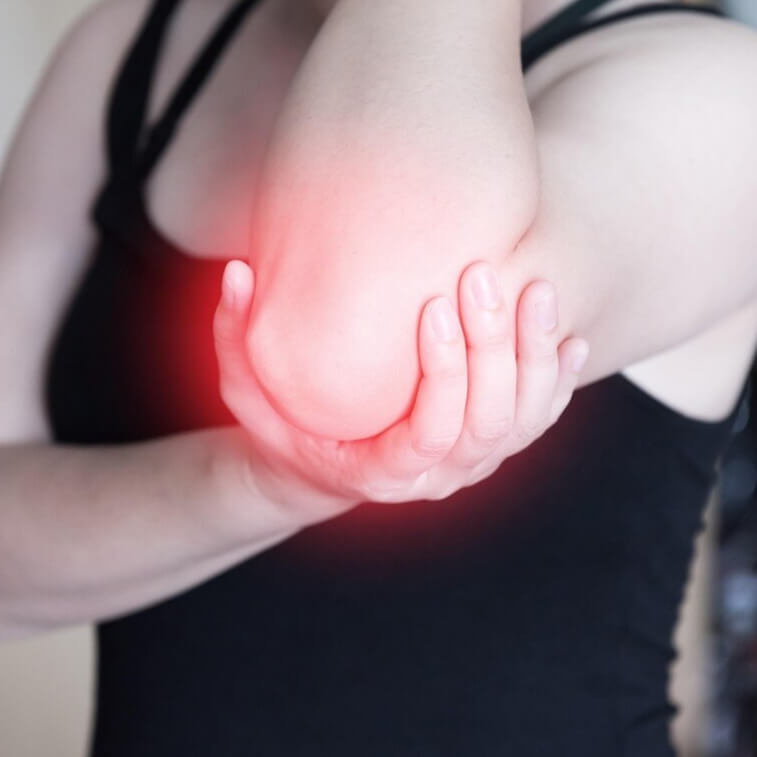 Elbow pain has a way of sneaking up on you. It might start as mild soreness after a workout or a long day on the computer, then gradually become something that makes it hard to grip a coffee cup, swing a club, or lift anything without wincing. At Rzepa Family Chiropractic and Massage, we treat elbow pain the same way we treat every problem: find the actual cause, address it directly, and help you get back to the activities you enjoy.
Overuse Is Almost Always the Culprit
The elbow is a simple hinge joint. When it’s healthy, it works quietly in the background. When something goes wrong, it’s almost always because of how that joint is being loaded, not because the elbow itself is fragile. The most common conditions we see at the practice are lateral epicondylitis (tennis elbow) and medial epicondylitis (golfer’s elbow), both caused by overuse and repetitive strain on the tendons attaching to the elbow.
What Causes Elbow Pain?
Several factors contribute to epicondylitis and elbow pain:
- Repetitive gripping or swinging motions in sport or work
- Poor swing mechanics in golf or tennis
- Shoulder tension or guarding that transfers strain down the arm
- Excessive curling or loading in weight training without adequate rest
- Tight muscles around the elbow joint limiting proper movement
- Nerve tension from cervical or thoracic involvement
What Elbow Pain Tends to Feel Like
Tennis elbow produces pain and tenderness on the outside of the elbow that worsens with gripping, lifting, or extending the wrist. Golfer’s elbow causes pain on the inside of the elbow, often with weakness in the hand or forearm. Both can develop gradually from repetitive use, or appear more suddenly following a change in activity level or technique.
The pain may radiate into the forearm and, in some cases, be accompanied by a dull ache at rest that sharpens with movement.
When Professional Attention Is Needed
Elbow pain that doesn’t resolve with rest within a week or two, keeps returning with the same activity, or is limiting your grip strength or range of motion deserves a proper evaluation. Pain following a sudden injury, especially with visible swelling or inability to straighten the arm fully, should be assessed promptly.
Our Approach to Treating Elbow Pain
Dr. Bart Rzepa evaluates the elbow alongside the wrist and shoulder, because the kinematic chain connecting those joints often reveals where the problem is actually starting. Even when the pain is centered in the elbow, restrictions or tension in the shoulder frequently contribute to the stress being transferred down the arm.
Treatment typically combines several approaches. EPAT shockwave therapy is highly effective for epicondylitis, with a four-to-six session protocol that promotes tendon healing. Manual adjustments restore joint mobility.
Flossing technique wraps and stretches the tendons through movement to reduce tension and restore tissue mobility. Active Release Technique targets soft tissue restrictions with precise pressure and range-of-motion work. For patients whose elbow pain is linked to sport or activity mechanics, the focus extends to correcting grip, technique, and loading patterns so the problem doesn’t come back.
In some cases, temporary activity modification and proper recovery time are necessary to allow irritated tissues to calm down and heal before returning to full activity.
Get Back to What You Love Doing
If elbow pain is limiting your sport, your work, or your daily life, we’re here to help. Contact Rzepa Family Chiropractic and Massage today to book an appointment. You can also walk in Wednesday through Friday from 9 am to 7 pm.
